
Kilimanjaro Training Plan for Beginners (8-Week Guide)
Follow this 8-week Kilimanjaro training plan for beginners to build stamina, strength, and endurance before climbing Mount Kilimanjaro safely.
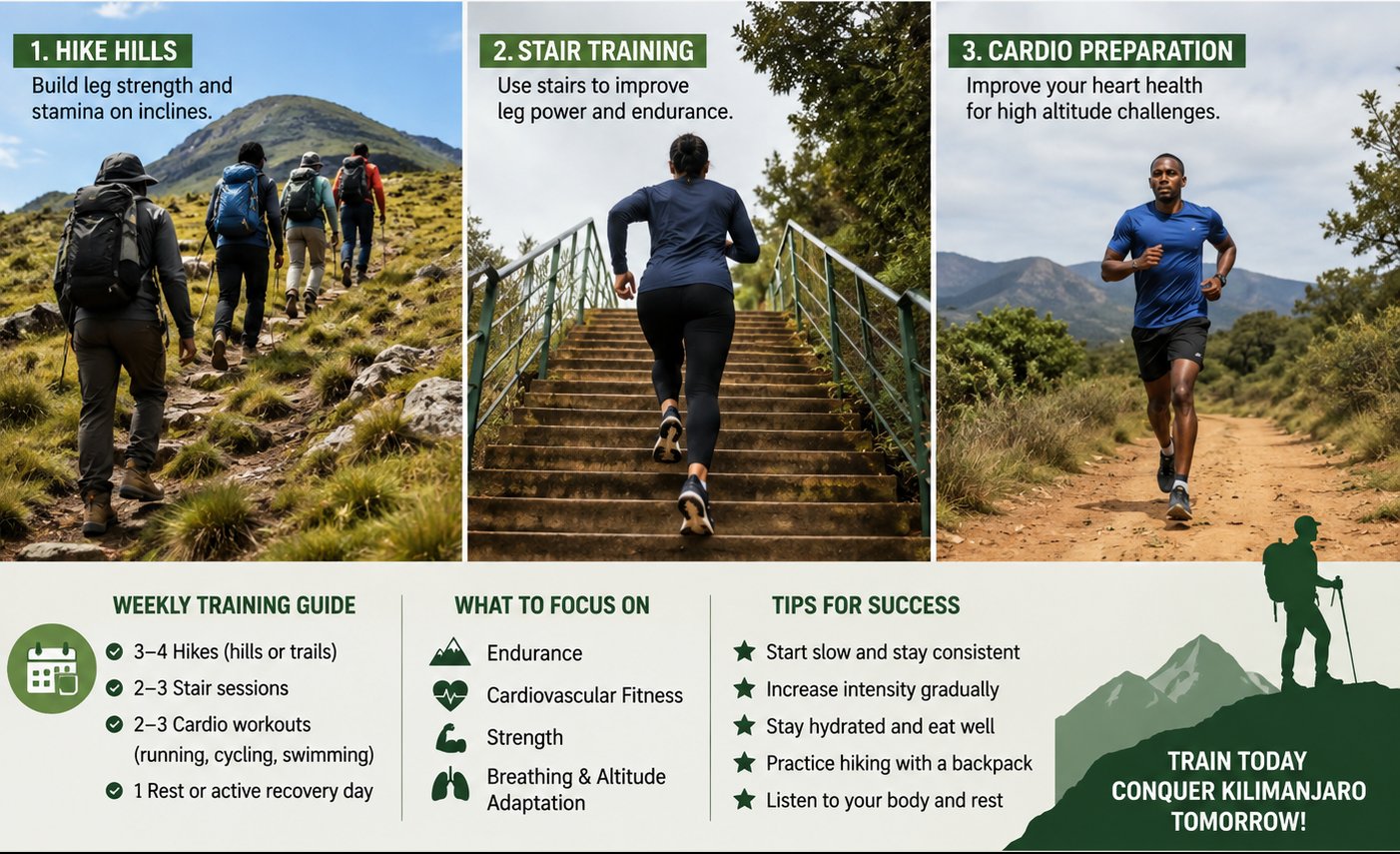
Kilimanjaro Training Plan for Beginners (8-Week Guide)
Preparing for Mount Kilimanjaro is not about extreme athletic performance—it is about building consistent endurance, leg strength, cardiovascular fitness, and mental resilience over time. Every year, thousands of beginners successfully climb Kilimanjaro because they train smart, not necessarily hard. At Climb2Kili Adventures, we guide climbers from all over the world who have never climbed a mountain before. With the right 8-week preparation plan, even first-time hikers, older travelers, and nervous climbers can significantly improve their comfort, stamina, and summit success chances on Mount Kilimanjaro. This guide is designed to help you build a realistic, safe, and effective training routine before arriving in Tanzania for your climb via routes such as Machame, Lemosho, Marangu, Rongai, or Northern Circuit.
Why Training Matters for Kilimanjaro
Kilimanjaro is not a technical climb, but it is a high-altitude endurance challenge. The biggest difficulty is not steep climbing—it is walking for many hours per day over multiple days while your body adjusts to decreasing oxygen levels. Without preparation, even simple trekking can feel exhausting. But with proper training, your body becomes efficient at using oxygen, managing fatigue, and recovering after long trekking days. Good training does not guarantee summit success, but it significantly improves comfort, confidence, and overall experience on the mountain.
Build Endurance First
Focus on long walking and cardio before strength training.
- Improves oxygen efficiency
- Reduces fatigue
Strengthen Legs
Your legs carry you for 6–8 hours daily on the mountain.
- Uphill stamina
- Downhill control
Train Consistently
Small daily training is more effective than occasional intense workouts.
- Builds discipline
- Improves adaptation
Prepare Mentally
Mental readiness is as important as physical fitness on summit night.
- Confidence building
- Stress control
8-Week Kilimanjaro Training Plan Overview
| Week | Focus | Training Type | Goal |
|---|---|---|---|
| Weeks 1–2 | Base Fitness | Walking + light cardio | Build routine |
| Weeks 3–4 | Endurance | Hiking + stairs | Improve stamina |
| Weeks 5–6 | Strength + stamina | Long hikes + weighted backpack | Mountain simulation |
| Weeks 7–8 | Peak preparation | Back-to-back hikes | Summit readiness |
Weeks 1–2: Building Base Fitness
The first two weeks are about building consistency and preparing your body for regular movement. Many beginners underestimate this phase, but it is the foundation of your entire Kilimanjaro preparation. Start with simple activities such as walking, light jogging, or cycling for 30–60 minutes per day. The goal is not intensity, but consistency. You should also begin strengthening your legs and core with simple bodyweight exercises like squats, lunges, and step-ups.
Daily Walking
Walk at a steady pace for at least 30–60 minutes.
- Build consistency
- Improve stamina
Light Cardio
Include jogging, cycling, or swimming for endurance.
- Heart strength
- Better breathing
Basic Strength
Focus on squats, lunges, and core exercises.
- Leg stability
- Joint strength
Stretching Routine
Improve flexibility and reduce injury risk.
- Muscle recovery
- Better mobility
Weeks 3–4: Endurance Building Phase
During weeks 3–4, you should start increasing the intensity and duration of your training. This phase prepares your body for longer trekking days similar to those on Kilimanjaro routes like Machame or Lemosho. Begin hiking on hills or uneven terrain. If possible, climb stairs regularly or use a treadmill with incline settings. You should also begin practicing with a light backpack (3–5 kg) to simulate real trekking conditions.
Hill Walking
Train on slopes to simulate mountain conditions.
- Uphill strength
- Balance improvement
Stair Training
Use stairs to build climbing endurance.
- Leg power
- Cardio boost
Weighted Backpack
Start carrying light trekking weight.
- Realistic training
- Muscle adaptation
Long Walks
Increase walking duration to 2–3 hours.
- Endurance growth
- Mental toughness
Weeks 5–6: Mountain Simulation Training
This is the most important phase of your Kilimanjaro preparation. During weeks 5–6, you should simulate real mountain conditions as closely as possible. Go on long hikes lasting 4–6 hours, preferably on consecutive days. Increase your backpack weight to 6–8 kg to simulate real trekking conditions on Kilimanjaro. This phase helps your body adapt to fatigue, uneven terrain, and long-duration movement, which are all critical for routes like Northern Circuit and Lemosho.
Long Hikes
Train for 4–6 hour trekking sessions.
Back-to-Back Days
Hike on consecutive days to build endurance.
Weighted Training
Carry 6–8 kg backpack during hikes.
Terrain Practice
Train on uneven and uphill terrain.
Weeks 7–8: Peak Kilimanjaro Preparation
The final phase prepares your body for real expedition conditions. Reduce intensity slightly but maintain long endurance hikes and back-to-back training days. Focus on recovery, hydration, and mental preparation. This is the stage where your body fully adapts to trekking rhythm and fatigue management. Avoid overtraining during this period. The goal is to arrive in Tanzania fresh, strong, and mentally ready for summit success.
Final Long Hikes
Maintain endurance with 4–5 hour hikes.
- Consistency
- Stamina retention
Recovery Focus
Allow your body to rest and rebuild strength.
- Muscle recovery
- Energy balance
Mental Preparation
Prepare for summit night challenges mentally.
- Focus training
- Stress control
Light Training
Reduce intensity before departure.
- Avoid burnout
- Peak freshness
Common Mistakes Beginners Make
Many beginners either overtrain or undertrain before Kilimanjaro. Both approaches can reduce performance on the mountain. Common mistakes include: - Doing only gym workouts without walking practice - Ignoring stair or uphill training - Carrying no backpack during training - Training inconsistently - Starting preparation too late The most effective training approach is balanced, gradual, and consistent over time.
You do not need to be an athlete. Basic endurance, walking ability, and consistent training are enough for most beginners.
Ideally 6–8 weeks of consistent training is enough for most beginners.
No. Outdoor walking, hiking, and stair climbing are more important than gym workouts.
Long uphill walking with a backpack is one of the most effective training methods.
Start Preparing for Your Kilimanjaro Adventure Today
Climb2Kili Adventures helps beginners prepare and successfully summit Mount Kilimanjaro with expert guidance.
Plan Your ClimbPlan from this guide
Turn the research into a Tanzania trip
Compare related tours, browse destination guides, or ask our local team to shape the right route and pace.